
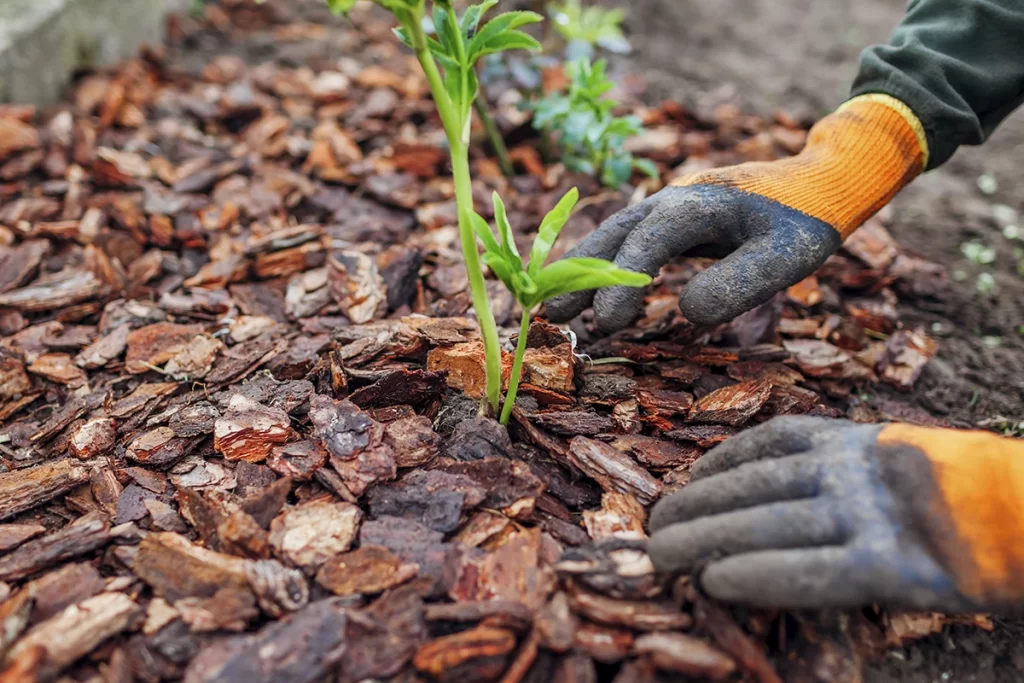
As winter comes to an end and the first signs of spring begin to appear, this is the ideal time to prepare garden beds before the most active growth of the season begins. In Western Washington, where heavy rainfall and saturated soils are very common, proper preparation not only makes planting in March–April easier, but also improves overall plant health, reduces disease, and enhances the soil.
According to regional climate data, much of Western Washington receives between 70% and 75% of its annual precipitation during the fall and winter months, which explains why many gardens experience compaction and drainage issues at the beginning of spring. Preparing garden beds in advance helps counteract these effects and allows the growing season to start under better conditions.
Here, we guide you step by step to identify winter-related issues, understand when and how to refresh mulch, and recognize when it may be appropriate to consider adding stone, soil, or compost to improve drainage.
Why Is It Important to Prepare Garden Beds Before Spring?
During winter, frequent rainfall combined with consistently wet soil can lead to soil compaction, which reduces the airspace needed for healthy root development. This lack of aeration also increases the risk of fungal diseases, especially when water does not drain efficiently. In addition, organic material, plant debris, or aged mulch often accumulates, which can interfere with the emergence and growth of new spring shoots.
In fact, agricultural extension studies indicate that between 60% and 70% of spring growth problems are directly related to compacted soils or poor drainage, a situation that is particularly common in humid climates like the Pacific Northwest.
Step 1: Evaluate Whether Your Garden Bed Is Compacted or Saturated
After a rainy winter, review your garden beds carefully.
Signs of compaction or saturation:
- Soil does not crumble easily.
- Water remains on the surface after rainfall.
- Plants show wilting leaves even when moisture is present.
Local Washington tip: Due to high winter precipitation in the area, soils tend to become saturated quickly, especially in low-lying areas or locations with little slope. Always inspect garden beds after the first dry periods as well.
Step 2: How to Refresh Mulch
Mulch is a key tool in garden bed preparation, as it helps retain adequate moisture during summer, reduce weed growth, and protect roots during winter. It is recommended to refresh or add mulch when the existing layer is thin, fragmented, or completely degraded, as well as in cases where old mulch interferes with proper soil drainage. Maintaining a healthy mulch layer directly contributes to soil health and supports strong plant development in spring.
How to do it correctly:
- Gently rake the old mulch to improve aeration.
- Apply a new layer of mulch approximately 2–3 inches thick.
- Make sure not to pile mulch directly against plant stems or trunks, as this can trap excess moisture.
Step 3: Adding Stone, Soil, or Compost — When and Why
In garden beds with chronically poor drainage or very dense clay soils, improving soil structure may be necessary.
Options and benefits:
- Drainage stone: Used in deeper layers beneath the soil in areas that consistently retain water. It helps prevent persistent puddling.
- Blended garden soil: Provides better structure, improved aeration, and a lighter texture than the original soil.
- Organic compost: Enhances soil fertility and biological activity excellent for new plantings.
Local recommendation: In many areas of Shoreline or Lake Forest Park, where soils can become easily saturated, a well-aerated mix of soil and compost before planting can make a significant difference in spring growth.
Step 4: Does a Garden Bed Require Full Renewal?
Not all garden beds only need a simple refresh. Consider a full renewal if:
- There is extensive damage from soil-borne diseases.
- The soil structure is extremely compacted.
- Previous plants have depleted soil nutrients.
- The bed is poorly defined or poorly designed for natural drainage.
A full renewal involves removing the mulch and topsoil layer, amending the soil with compost, stone, or quality soil, and redefining the edges according to the site’s topography.
Practical Tips for the Washington Area
- Avoid working garden beds when the soil is too wet; this can cause further compaction.
Use hand tools to gently lift and aerate soil without damaging roots.
The best time to prepare garden beds is late February through early March, before many plants begin active growth.
Refreshing mulch each spring helps reduce disease in ornamental plants and makes planting new shrubs or flowers easier.
Preparing Now Makes a Difference in Spring
In our experience, preparing garden beds before spring growth begins provides clear and long-lasting benefits. Well-prepared soil significantly reduces fungal issues and root rot, improves aeration, and allows plants to establish successfully from the start. In addition, this preventive work saves time and effort when March and April arrive, leaving the landscape ready for planting without delays.
Preparing garden beds properly now not only simplifies the entire gardening season, but also helps outdoor spaces remain healthier, more balanced, and visually appealing throughout the year.