
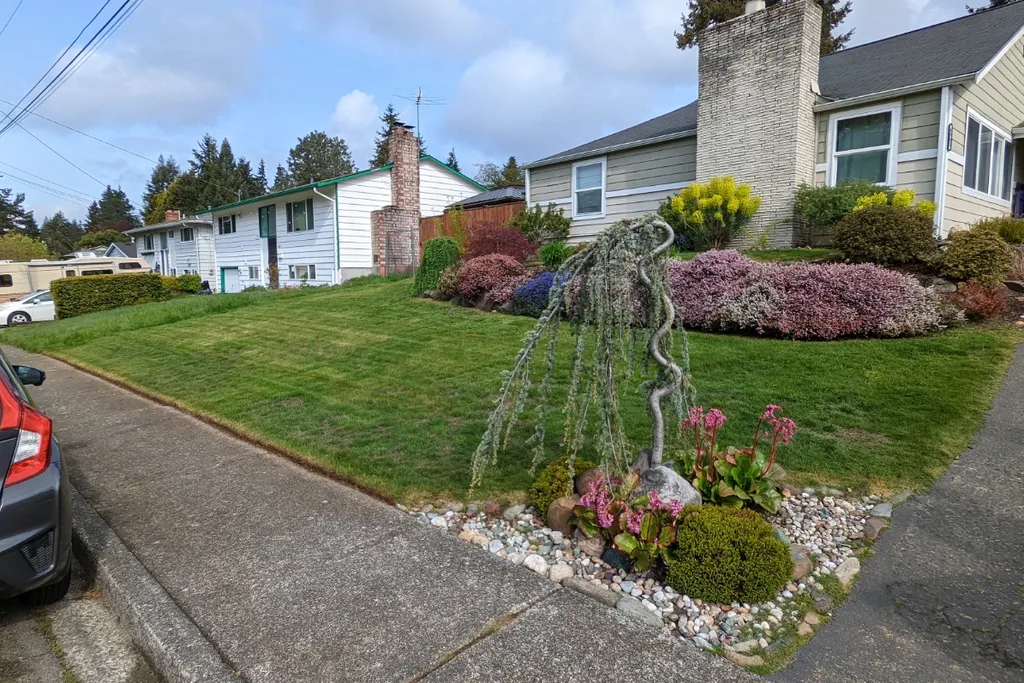
After several months of rain, cold temperatures, and limited growth, the end of winter is the ideal time to assess the condition of your lawn and prepare it for the growing season. In Western Washington, especially in communities like Shoreline and Lake Forest Park, lawns often emerge from winter with excess moisture, compacted soil, and weakened patches.
Taking the time to inspect and restore your lawn at the beginning of spring helps the grass grow stronger, more uniform, and resilient throughout the rest of the year. For many homeowners and HOAs, this is one of the most important times in the landscape maintenance calendar.
How to Assess Lawn Conditions at the End of Winter
Before performing any maintenance work, the first step is to see how the lawn has come through the winter season. Persistent Pacific Northwest rain can leave areas saturated, compacted, or with a buildup of organic material.
Some signs your lawn needs attention include yellowing or thinning patches, accumulation of leaves and organic debris, areas where water drains slowly, or sections where the grass simply has not resumed normal growth.
It is also important to walk on the lawn and notice how the soil responds. If the ground feels very hard or overly wet, the soil likely needs aeration to restore its natural structure.
Signs of Compaction and Excess Moisture
Compacted soil is one of the most common problems after winter in Western Washington. When the soil is compressed too much, grass roots cannot receive enough oxygen, water, or nutrients.
The most common signs of compaction include areas where water accumulates, very hard soil underfoot, and irregular grass growth. The presence of moss can also indicate excess moisture and poor drainage.
These conditions are especially common in residential gardens and community areas that experience heavy foot traffic during the winter.
Why Dethatching, Aeration, and Overseeding Are Essential
Once the lawn has been evaluated, there are three key practices that help restore it properly at the beginning of spring:
- Lawn thatching: This involves removing the layer of organic material that builds up between the soil and the living grass. When this layer becomes too thick, it can prevent water, air, and nutrients from reaching the roots effectively.
- Aeration: Aeration allows the soil to breathe again by creating space for water, oxygen, and nutrients to penetrate the turf. This process is especially important for properties where the soil has become compacted during winte
- Overseeding: Overseeding helps fill in thin or damaged areas of the lawn. By introducing new seeds, the lawn’s density improves and its resilience is strengthened for the rest of the season. We provide a watering schedule to help promote maximum germination rates.
Together, lawn thatching, aeration, and overseeding are fundamental steps to restore a lawn’s health after winter.
When to Start Mowing Your Lawn?
A common question among homeowners is when it is appropriate to begin lawn mowing in Shoreline after winter.
In the Pacific Northwest, it is best to wait until the grass begins to grow actively and the soil is dry enough to avoid compaction. This typically occurs between late March and April, depending on seasonal temperatures and rainfall.
The first mow should be light, avoiding cutting the grass too short so as not to weaken it during this early growth stage.
Preparing Your Lawn Now Improves the Entire Season
The transition between winter and spring is one of the most important stages for lawn care. Assessing the lawn’s condition, correcting compaction issues, and practices such as thatching, aeration, and overseeding enable the lawn to recover faster and grow densely and prevent other issues throughout the year. A dense lawn crowds out weeds and moss, avoiding extra work to help bring a lawn back to looking its best.
At Ballinger Landscaping, we help homeowners and communities prepare their lawns after winter with professional lawn maintenance and recovery services. If your garden needs attention as spring begins, contact us and our team will be ready to help you achieve a healthy lawn ready for the new season.
